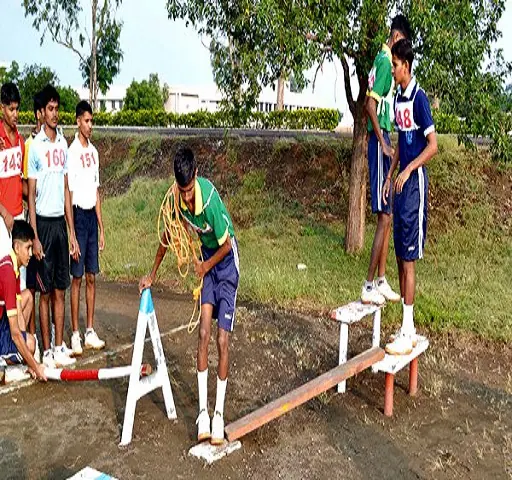
Best Proven Strategies to Handle Pressure in ISSB Command Tasks

Complete Guide To Command Tasks In ISSB: Lead Your Group To Success

Discover the secrets to ace the Command Task in ISSB. This guide provides an in-depth analysis of the GTO's expectations, leadership strategies, and the psychological nuances of the "Walking Interview" to help you secure a recommendation for the Pakistan Armed Forces.

What Is Meant By Command Task?
The Command Task is a critical individual leadership assessment within the ISSB GTO series. It transitions you from being a team player to a designated leader. In this activity, you are given a specific military obstacle to solve, along with a group of subordinates who must follow your direct orders and strategies.
The Strategic "Walking Interview" Phase
The task begins long before you touch the ropes. While walking toward the obstacle area, the GTO engages you in a brief, informal conversation.
  • This conversation aims to reveal your genuine traits by making you feel comfortable.
  • Candidates often expose their true character when they behave too "friendly" or casual.
  • Always remain respectful, confident, and professional during this movement.
Briefing, Strategy, And Task Completion
Once you reach the task site, the GTO officially designates you as the Commander. Your path to success involves:
  • Instruction Gathering: Carefully listen to the task limits and rules provided by the GTO.
  • Authoritative Briefing: Call your group with a loud, commanding voice and brief them on your plan clearly.
  • Independent Strategy: You are free to use your own unique strategies to navigate the obstacle.
  • Execution: Lead from the front, manage your team effectively, and complete the mission within the allotted time.

Critical Success Factors For ISSB Command Tasks
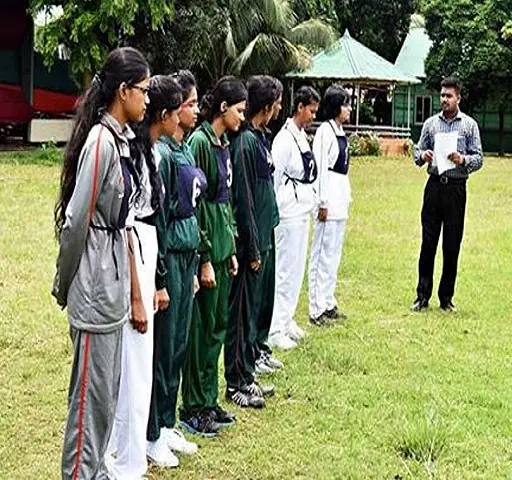
✓Listen intensely to the GTO’s briefing to capture every rule and boundary.
✓Provide concise, to-the-point answers during the GTO interaction.
✓Avoid unsolicited explanations; speak only when asked by the GTO.
✓Maintain a serious, professional demeanor during the "Walking Interview."
✓Focus entirely on the task; do not look at the GTO while performing.
✓Foster maximum cooperation with your group fellows at all times.
✓Invite suggestions from the group before starting; their input can be fruitful.
✓Ensure your strategy is clear enough to avoid asking questions after the briefing.
✓Maintain a firm but respectful tone; never become harsh with your team.
✓Provide a comprehensive briefing to the team before the first move.
✓Assign specific work areas to individuals so everyone knows their role.
✓Supervise actively by keeping an eye on every individual’s performance.
✓Show empathy by checking the health/fitness of your fellows before the task.
✓Address fellows by Chest No, "Buddy," or "Friend" to build rapport.
✓Keep morale high; boost struggling fellows with "Well Done" or "Keep It Up."
Candidate Alert: You must be physically robust. Daily exercise is mandatory before your ISSB date. Treat every command task as your Final Battle for recommendation!

ISSB Command Task, PGT & Half-Group Tasks: Complete Strategy Guide

1. Command Task (CT)

An individual leadership evaluation where you are the Commander. You must lead selected subordinates to clear a complex obstacle using specific resources.

Focus: Leadership, Decision-making, Command Presence.

2. Progressive Group Task (PGT)

A team mission where the entire group works together to cross four obstacles of increasing difficulty under a strict time limit.

Focus: Teamwork, Planning under Pressure, Coordination.

3. Half-Group Task (HGT)

Conducted with fewer members to give the GTO a closer look at your individual initiative and cooperation within a small team.

Focus: Personal Initiative, Team Support.

Comparison: CT vs PGT vs HGT

Feature Command Task (CT) PGT Half-Group (HGT)
Nature Individual Leadership Full Group Teamwork Small Group Teamwork
Role Commander (Leader) Team Member Team Member
Focus Leadership & Authority Cooperation & Planning Participation
Difficulty Moderate to High Increasing Progressively Moderate
Time Pressure High Moderate Moderate

3-Phase Execution Strategies

Phase 1: Understanding & Planning
  • Listen to GTO instructions without looking away.
  • Identify the "Load," "Color Rules," and "Out-of-Bounds" areas.
  • Pro Tip: Visualize and propose a plan within 10–15 seconds.
Phase 2: Execution & Leadership
  • Use a loud, clear command voice.
  • Assign roles logically: Strongest men for support, agile men for crossing.
  • Don't just give orders; stay physically active in the task.
Phase 3: Adaptation & Completion
  • If a plan fails, stay calm and switch strategy immediately.
  • Encourage teammates; never lose your temper.
  • Finish within the time to show mission-oriented thinking.

10 Critical Mistakes To Avoid

Staying silent / Lack of confidence
Over-dominating or shouting
Ignoring group suggestions
Breaking the "Color Rules"
Unnecessary debates / Wasting time
Lack of physical participation
Poor subordinate selection (CT)
Panicking under pressure
Copying others blindly
Giving up before time ends

6-Week Physical & Psychological Mastery Program

WEEK 1 – 2
Foundation
  • Push-ups: 15–20 reps × 3 sets
  • Running: 1–2 km daily
  • Plank hold: 30–45 seconds
  • Full Body Stretching
WEEK 3 – 4
Endurance
  • Push-ups: 25–30 reps
  • Pull-ups: 5–10 reps
  • Running: 3–4 km
  • Jump Training (Box/Broad)
WEEK 5 – 6
Simulation
  • Obstacle Crossing Practice
  • Group Coordination Drills
  • Rope Climbing
  • Timed Agility Challenges

Psychological Guide

Assessors focus on OLQs (Officer Like Qualities). They primarily evaluate:

  • Unshakable Confidence
  • Team Cooperation & Initiative
  • Emotional Stability under stress

Regional Center Analysis

Centers (Kohat, Gujranwala, Malir, Quetta) may vary slightly in layout, but:

  • Evaluation criteria is identical
  • GTO interaction standards are constant
  • Leadership is assessed universally

Quick Reference Checklist

  • ✔ Speak Clearly
  • ✔ Participate Actively
  • ✔ Respect Members
  • ✔ Follow Rules
  • ✔ Think Before Acting
  • ✔ Show Leadership
  • ✔ Stay Calm
  • ✔ Encourage Others
Success in ISSB is not about being the strongest — it's about being smart, cooperative, and confident.

Explore Current Job Opportunities In Pakistan Armed Forces

Find the latest advertisements, online registration dates, and eligibility criteria for Commissioned Officers, Soldiers, Sailors, and Airmen through the official links below.

Official Shaheen Forces Connection

Become part of Pakistan's premier preparation network. Click the buttons below to follow our official updates across all platforms.

Frequently Asked Questions About ISSB Command Tasks

The primary purpose is to evaluate your Officer Like Qualities (OLQs), specifically your leadership, ability to plan under pressure, and how effectively you command your subordinates to complete a mission.
Usually, a candidate is given 10 to 15 minutes to complete the task. This includes the time for the GTO's briefing, your planning, and the actual execution with your group.
The GTO uses this informal walk to conduct a short interview to make you relax. This helps him observe your natural personality, confidence levels, and background before you start the high-pressure task.
While completion is preferred, your leadership process is more important than just finishing. The GTO checks your strategy, how you handle difficulties, and how you treat your subordinates during the struggle.
Yes. A good leader adapts to changing situations. If your initial plan isn't working, show presence of mind by quickly switching to a better strategy without panicking.
Never get harsh or shout. Instead, encourage them using words like "Well done," or "You can do it." If they still struggle, assign them a task better suited to their abilities to ensure the mission continues.
In a Command Task, the GTO’s main focus is the Commander. He observes your briefing, command voice, and supervision skills. However, being a good subordinate in others' tasks is also vital for your overall selection.
Common materials include wooden planks (fatta), ballies (poles), and ropes. You must use these creatively to bridge gaps and navigate obstacles without touching the "Red" (out-of-bounds) areas.
Call them with a loud and clear voice. Briefly explain the starting point, the finishing point, the rules, and then clearly outline your strategy. Always ask if they have any health issues before starting.
Yes, but do not rely solely on them. Taking a quick suggestion shows you are a democratic leader, but the final decision and command must remain your own.
error: Content is protected !!
Scroll to Top